
China’s National Medical Products Administration (NMPA) received 14,647 medical device registration applications in 2025, highlighting the scale of regulatory oversight. Meanwhile, revised GMP requirements are bringing stricter inspection expectations for manufacturers entering the Chinese market. Understanding medical device registration in China is therefore essential for navigating risk classification, type testing, clinical evaluation, NMPA approval, and ongoing regulatory compliance.
Table of Contents
What Is Medical Device Registration in China?
Medical device registration in China is a regulatory process that ensures medical devices meet safety, effectiveness, and quality requirements before entering the market. Under State Council Order No. 739 and SAMR Order No. 47, China follows a risk-based classification system. Class I devices require filing, while Class II and III devices require formal registration. Additionally, the National Medical Products Administration (NMPA) oversees the regulatory framework, with national and provincial authorities handling approvals. Therefore, what older guides call CFDA registration now falls under the NMPA-led regulatory system.
Why the NMPA Dossier Becomes Your Inspection Baseline?
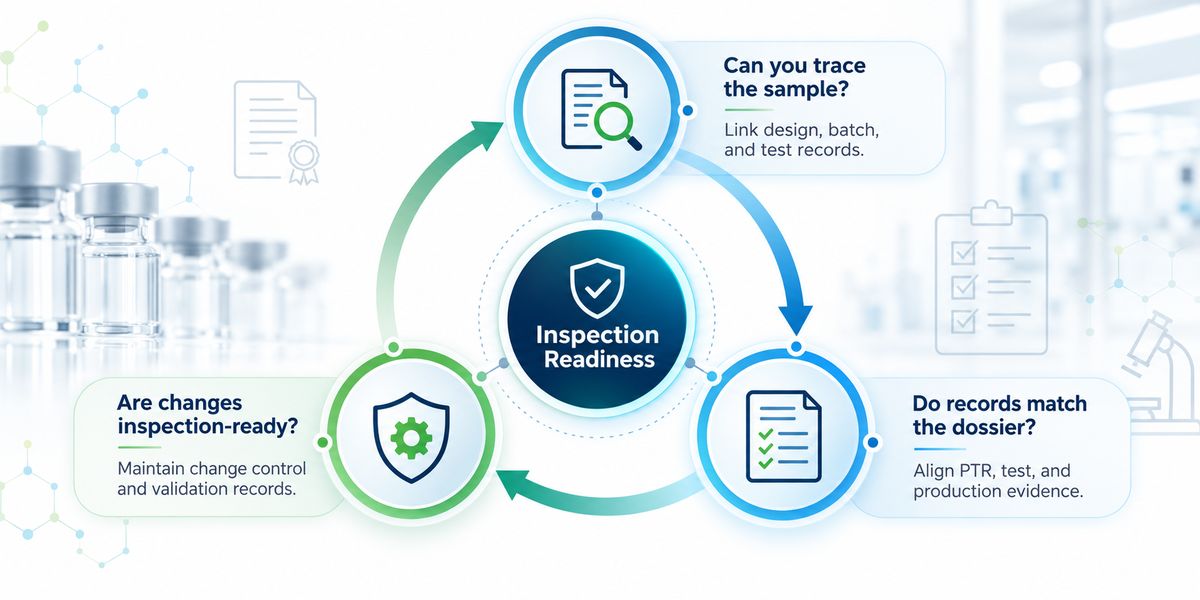
The NMPA registration dossier serves as a key reference during medical device quality management system (QMS) inspections in China. Under SAMR Order No. 47, Article 49, inspectors verify the authenticity of devices used for registration testing and clinical trials. Specifically, they review design, development, and production records to confirm sample traceability. Therefore, manufacturers should prepare the following records before inspection:
- Design and development records: Design inputs, reviews, verification, and validation results.
- Production records: Batch histories, manufacturing processes, and sample identification.
- Quality control records: Inspection results, test reports, and product technical requirements.
- Traceability records: Material details, component records, and sample distribution.
- Change control records: Design changes, deviations, and corrective actions.
These records help demonstrate that tested devices match the documented design and manufacturing processes.
The Four Evidence Blocks CMDE Tests
China’s Center for Medical Device Evaluation (CMDE) reviews the technical evidence supporting medical device safety and effectiveness. However, a complete NMPA registration dossier alone does not guarantee approval. Reviewers assess product risks, technical performance, and clinical evidence. Additionally, regulators may inspect quality management system (QMS) records to verify consistency with the submitted documentation. Therefore, manufacturers must ensure that their technical evidence is accurate, traceable, and inspection ready.
Four evidence blocks support NMPA approval: design controls, technical testing, clinical evaluation, and QMS compliance.
- Product Technical Requirements (Available PDF)
- Type Testing and Self-Test Capability (Available PDF)
- Clinical Evaluation Evidence (Available PDF)
- Quality System Evidence Under the 2025 GMP (Available PDF)
This infographic highlights four essential evidence blocks for NMPA approval, showing how technical requirements, testing, clinical evaluation, and quality systems support regulatory compliance.
Product Technical Requirements (Available PDF)
Product Technical Requirements (PTR) define performance, safety, and testing standards for NMPA registration. Manufacturers must demonstrate compliance through documented testing.
Download NMPA Product Technical Requirements Guidance (2022) here
Type Testing and Self-Test Capability (Available PDF)
NMPA registration testing verifies medical device compliance with technical requirements. Self-testing requires qualified personnel, suitable equipment, validated methods, and reliable records.
Clinical Evaluation Evidence (Available PDF)
NMPA clinical evaluation uses clinical data to demonstrate medical device safety, performance, and effectiveness. Depending on product risk, manufacturers may use clinical literature, comparable-device evidence, or clinical investigation data.
Quality System Evidence Under the 2025 GMP (Available PDF)
China’s revised medical device GMP strengthens quality assurance, risk management, and design controls. Manufacturers must maintain traceable QMS records, validation evidence, and change control documentation.
Classification and Filing Routes for Foreign Manufacturers
NMPA medical device classification determines the registration route, reviewing authority, and technical review timeline in China. Class I devices require filing, while Class II and III devices undergo formal registration. Additionally, foreign manufacturers must appoint a Chinese enterprise legal person as their regulatory agent. For imported Class I devices, NMPA requires notarized supporting documents, conformity declarations, instructions for use (IFU), and labels provided by the overseas filer.
The following table compares NMPA registration routes, responsible authorities, and technical review timelines for imported medical devices.
NMPA Medical Device Classification and Registration Routes
| Risk class | Registration route | Responsible authority | Technical review timeline |
|---|---|---|---|
|
Class I – Low risk |
Product filing |
NMPA |
No registration technical review; filing information published within 5 working days |
|
Class II – Moderate risk |
Formal registration |
NMPA / CMDE |
60 working days |
|
Class III – High risk |
Formal registration |
NMPA / CMDE |
90 working days |
Keeping NMPA Approval Valid After Launch
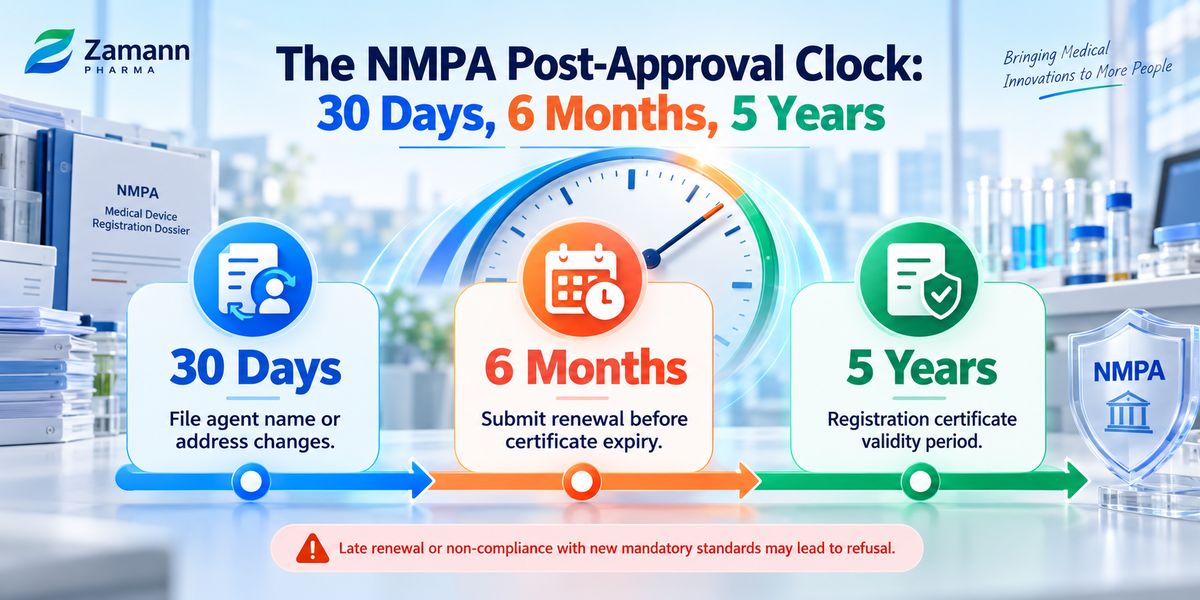
NMPA approval requires continuous regulatory compliance after a medical device enters the Chinese market. Substantial changes affecting safety or effectiveness require change registration. However, changes to the Chinese agent’s name or address must be filed within 30 days. Additionally, devices moved to a higher risk class require registration under the new classification. Registration certificates remain valid for five years, while renewal applications must be submitted six months before expiry. Therefore, NMPA may refuse renewal if manufacturers miss the deadline or fail to meet newly implemented mandatory standards.
This infographic highlights three critical NMPA registration deadlines that help manufacturers maintain approval and avoid compliance gaps.
Final Words
In 2025, Beijing regulators conducted 1,623 inspections of medical device manufacturers, highlighting the importance of ongoing regulatory oversight. As inspections increasingly focus on quality systems and manufacturing evidence, companies must maintain accurate records and effectively change controls. Therefore, medical device registration in China is only the beginning. Long-term compliance requires continuous inspection readiness, reliable documentation, and proactive risk management.

Medical Devices & IVDs EU Registration
We guide companies through medical device and IVD EU registration by supporting MDR and IVDR requirements, technical documentation, and structured processes for compliant market access.
FAQ
FDA clearance or CE marking does not automatically exempt a device from NMPA clinical trials. However, manufacturers may use existing clinical data or comparable-device evidence. Clinical trials are required when available evidence cannot establish safety and effectiveness.
Yes. NMPA accepts qualified manufacturers’ self-testing reports instead of third-party laboratory reports. However, manufacturers must demonstrate testing competence, suitable equipment, reliable methods, and documented results that meet product technical requirements.
Manufacturers must apply for NMPA registration renewal six months before certificate expiry. Registration certificates remain valid for five years. Late applications or failure to meet newly implemented mandatory standards can result in renewal refusal.
references

Alireza Zarei is the founder and CEO of Zamann Pharma Support GmbH in Germany. He pairs 20 years in GMP—beginning in a lab in 2005—with front-line global project delivery for companies such as Boehringer Ingelheim, Roche, BioNTech, Takeda, Fresenius Medical Care, Biotest, ratiopharm and others. He focuses on innovative validation and qualification procedures, master data management strategies, end-to-end LIMS implementation and care, with pragmatic advice on general Quality Management topics and management level OpEx consulting. Together with his team he also created Pharmuni.com as the leading GMP learning platform in the industry.