
Since December 2022, Indian regulators have conducted over 960 risk-based inspections of pharmaceutical premises nationwide. For Hyderabad’s manufacturers, this highlights the growing need for strong GMP controls and reliable audit evidence. Moreover, revised Schedule M has increased the importance of inspection readiness. As a result, pharma consultancy in hyderabad helps manufacturers address regulatory challenges. Professional pharma consultancy services support GMP gap assessments, process validation, CAPA effectiveness, and inspection readiness.
Table of Contents
What Is Pharma Consultancy in Hyderabad?
Pharma consultancy in Hyderabad helps pharmaceutical manufacturers meet GMP standards, strengthen quality systems, and prepare for regulatory inspections. Pharmaceutical consultants in Hyderabad provide expert support with CDSCO compliance, revised Schedule M requirements, process validation, and quality risk management. Additionally, they conduct GMP gap assessments, improve documentation, and evaluate CAPA effectiveness. As a result, manufacturers can address compliance gaps, maintain consistent product quality, and demonstrate inspection readiness to Indian and international regulators.
Why Is Inspection Readiness Critical for Pharmaceutical Manufacturers?
Inspection readiness is critical because pharmaceutical manufacturers must prove that their GMP systems work in practice. CDSCO compliance and USFDA inspection readiness require controlled manufacturing processes, accurate documentation, and traceable quality records. Moreover, effective pharmaceutical quality systems help companies manage deviations, assess risks, and verify CAPA effectiveness. Therefore, manufacturers must maintain clear evidence that employees follow approved procedures and processes remain under control. This approach reduces compliance risks, supports product quality, and strengthens confidence during regulatory inspections.
4 Critical Areas of Pharma Consulting for Inspection Readiness
Inspection readiness requires more than complete documentation on audit day. Pharmaceutical manufacturers must demonstrate that GMP controls work during routine operations. Therefore, GMP consultants in Hyderabad help identify compliance gaps, assess regulatory requirements, and review validation evidence. Additionally, they evaluate CAPA effectiveness and strengthen quality system oversight. Together, these activities help manufacturers reduce compliance risks and maintain inspection readiness.
The following four areas highlight how targeted pharma consulting supports regulatory compliance and provides reliable evidence during inspections.
- GMP Gap Assessments and Mock Inspections (Available PDF)
- Regulatory Compliance Under Revised Schedule M (Available PDF)
- Process Validation and Qualification Evidence (Available PDF)
- CAPA Effectiveness and Quality System Oversight (Available PDF)
This infographic highlights four essential pillars that help pharmaceutical manufacturers strengthen GMP compliance, maintain quality systems, and prepare for regulatory inspections.
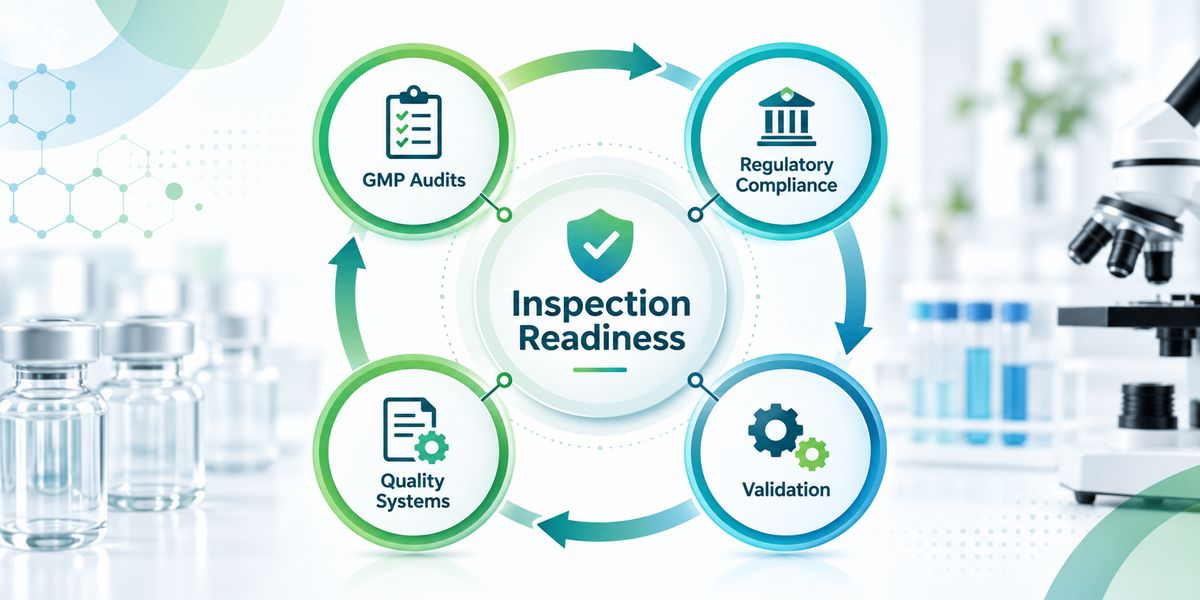
GMP Gap Assessments and Mock Inspections (Available PDF)
GMP gap assessments identify weaknesses in manufacturing processes, documentation, and quality controls. Additionally, mock inspections help manufacturers address deficiencies and improve inspection readiness.
Download EudraLex Volume 4, Chapter 9 — Self Inspection Here
Regulatory Compliance Under Revised Schedule M (Available PDF)
Revised Schedule M strengthens GMP requirements for pharmaceutical manufacturing and quality systems in India. Therefore, manufacturers must update procedures, close compliance gaps, and maintain reliable inspection evidence.
Download G.S.R. 922(E) — Notification of Schedule M of Drugs Rules, 1945 Here
Process Validation and Qualification Evidence (Available PDF)
Process validation demonstrates that manufacturing processes consistently meet predefined quality requirements. Moreover, equipment qualification and ongoing monitoring provide evidence of controlled and reliable operations.
Download EU GMP Annex 15: Qualification and Validation (2015) Here
CAPA Effectiveness and Quality System Oversight (Available PDF)
Effective CAPA systems address root causes and help prevent recurring quality issues. Furthermore, quality system oversight verifies corrective actions, monitors performance, and supports continuous improvement.
How Can Manufacturers Select the Right Pharma Consultant?
Choosing the right pharma consultant requires more than reviewing qualifications and industry experience. Pharmaceutical manufacturers should evaluate expertise in GMP compliance, CDSCO requirements, revised Schedule M, and USFDA inspection readiness. Additionally, reliable pharmaceutical consultants in Hyderabad should provide independent assessments, clear documentation, and practical corrective actions. Therefore, manufacturers should prioritize technical competence, defined deliverables, and measurable improvements in quality system performance.
The following table outlines five essential criteria for selecting a pharma consultant and evaluating their effectiveness.
| Selection Criteria | What Manufacturers Should Evaluate | Expected Deliverables |
|---|---|---|
|
Regulatory Experience |
Knowledge of CDSCO, revised Schedule M, USFDA, and applicable GMP requirements. |
Regulatory gap analysis and compliance action plan. |
|
Technical Competence |
Practical expertise in GMP audits, process validation, qualification, and quality systems. |
Technical assessments, validation documentation, and improvement recommendations. |
|
Independent Assessments |
Ability to conduct objective GMP reviews and identify compliance weaknesses. |
Independent audit reports, risk ratings, and corrective action recommendations. |
|
Documented Deliverables |
Clear project scope, responsibilities, timelines, and reporting procedures. |
Approved assessment reports, CAPA plans, and documented evidence. |
|
Measurable Outcomes |
Progress in resolving critical findings, CAPA effectiveness, and sustained process control. |
Closure evidence, effectiveness-check results, and quality performance indicators. |
What Deliverables Should a Pharma Consultancy Provide?
A professional pharma consultancy should deliver more than an audit report. Its services should include risk-ranked findings, remediation plans, and clearly assigned responsibilities. Additionally, consultants should provide validation records, CAPA effectiveness checks, and documented evidence of completed improvements. Each corrective action should have a defined owner, deadline, and verification method. As a result, pharmaceutical manufacturers can track compliance progress, demonstrate effective controls, and maintain reliable evidence for regulatory inspections.
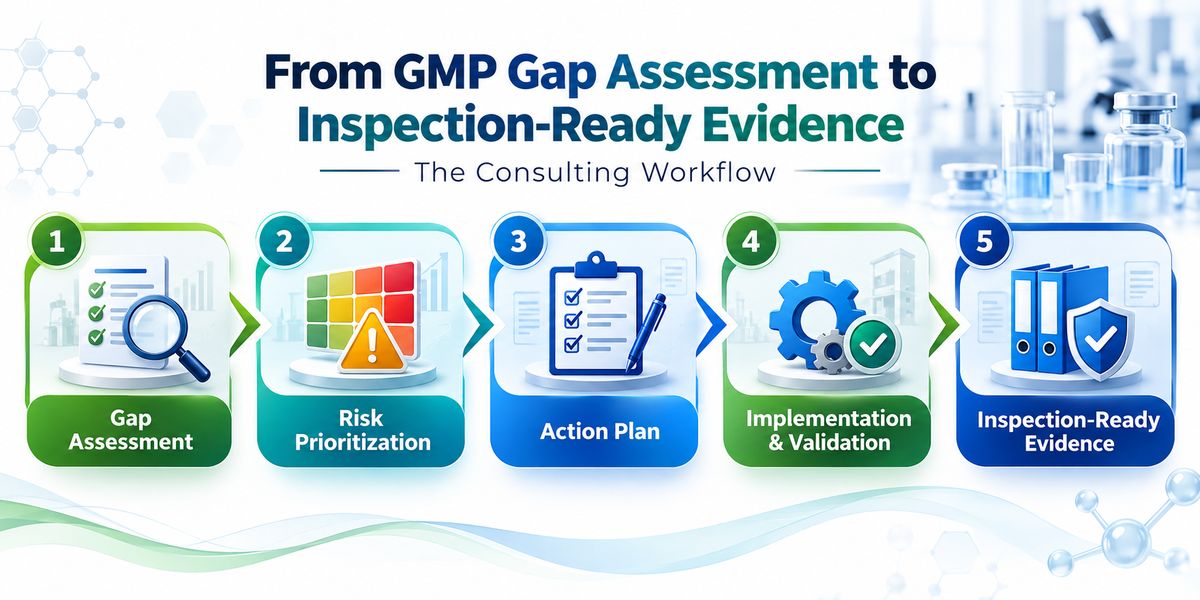
This infographic illustrates how a GMP gap assessment leads to corrective actions, verified improvements, and documented evidence that supports regulatory inspection readiness.
The infographic below shows how a structured GMP gap assessment leads to risk-based corrective actions, effectiveness checks, and documented evidence for regulatory inspections.
Final Words
In FY 2026 to date, the FDA reported that 87% of inspections conducted by its India office were unannounced. This trend highlights why pharmaceutical manufacturers must maintain continuous GMP compliance rather than prepare only before scheduled audits. Therefore, pharma consultancy in hyderabad can help manufacturers strengthen quality systems, verify CAPA effectiveness, and maintain reliable inspection evidence. Ultimately, inspection readiness depends on proven controls, not paperwork alone.

Quality Management System
We work with pharmaceutical teams to design, implement, and run effective Quality Management Systems, covering change control, CAPA, deviations, and audits to support consistent GMP compliance.
FAQ
Revised Schedule M lifts Indian GMP to WHO-GMP standards, so manufacturers now need a working quality system, risk management, and validated processes and equipment. Large companies have had to comply since mid-2024, and MSMEs since the end of 2025.
Decide what success looks like before closing the CAPA, then check the data over time. If the problem doesn’t come back, the fix worked.
Keep records, CAPAs and audit trails up to date every day, and run your own mock audits. When good practice is a daily habit, a surprise visit is nothing to fear.
references

Marco Klinger is Head of Quality Services at Zamann Pharma Support, where he leads consulting teams through complex regulatory and quality-driven projects. He brings more than 15 years of hands-on compliance experience across regulated industries. His work includes close collaboration with companies such as Reckitt, Sanofi, Biotech, Biotest, and others. Marco has deep expertise in medical device development, aseptic manufacturing, and the design, implementation, and management of complete quality management systems within GMP-regulated environments.