
FDA conducted 1,248 drug quality assurance inspections in FY2025, up from 972 in FY2024. This 28% rise shows why regulatory readiness now demands stronger planning and execution. Therefore, pharma regulatory consultants help companies manage submissions, agency interactions, and evolving pharma regulations.
They also align regulatory strategy across EMA, FDA, and MHRA requirements throughout the product lifecycle. As expectations rise, expert support can reduce compliance gaps, submission delays, and regulatory risks.
Inhaltsverzeichnis
What Do Pharma Regulatory Consultants Do?
Pharma regulatory consultants turn complex scientific, quality, clinical, and commercial information into clear regulatory actions. They assess product data, identify regulatory risks, and build practical submission strategies. In addition, they prepare regulatory documents and support communication with health authorities. They also help companies respond to agency questions and manage changes after approval. As a result, pharmaceutical regulatory consulting connects technical evidence with compliance requirements across the full product lifecycle.
Why Regulatory Affairs Consulting Matters Before Major Milestones?
Regulatory affairs consulting helps pharmaceutical companies identify critical gaps before major development, submission, or approval milestones. Consultants review available evidence, assess pathway risks, and check whether submission plans match authority expectations. In addition, they can spot missing data, weak justifications, or documentation issues before they cause costly delays. Therefore, early regulatory input supports better decisions, stronger submissions, and more efficient use of development resources.
4 Areas Where Regulatory Consultants Add the Most Value
Regulatory consultants create the most value when complex evidence must become clear regulatory action. They help teams identify risks, align development plans, and prepare documentation that meets health authority expectations. In addition, their support can reduce avoidable gaps before submissions or agency discussions. Therefore, effective regulatory affairs consulting strengthens decision-making from early development through post-approval lifecycle management.
The following four areas show where regulatory expertise can have the greatest impact on product development and regulatory compliance:
- Build the Regulatory Strategy and Development Pathway (Available PDF)
- Prepare Regulatory Submissions and eCTD Packages (Available PDF)
- Prepare for Health Authority Interactions (Available PDF)
- Manage Post-Approval Changes and Product Lifecycle (Available PDF)
This infographic shows how regulatory strategy consulting connects development planning, regulatory submissions, authority interactions, and lifecycle decisions on the path to market authorization.
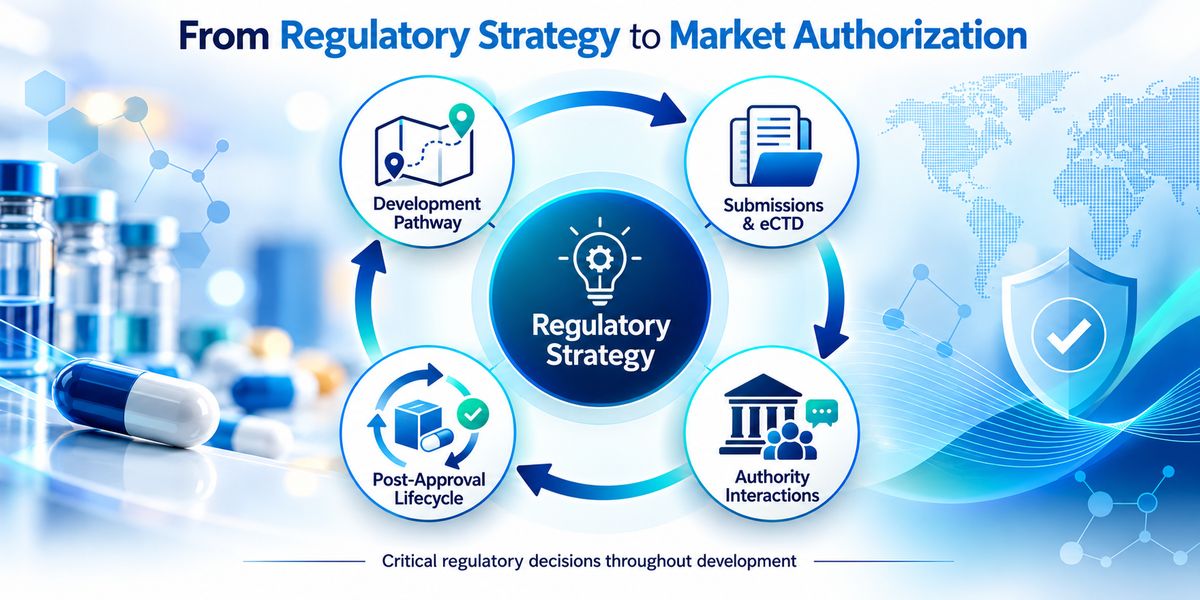
Build the Regulatory Strategy and Development Pathway (Available PDF)
A regulatory strategy defines the approval pathway, evidence needs, and key development milestones. It also aligns clinical, CMC, and regulatory activities with authority expectations.
Prepare Regulatory Submissions and eCTD Packages (Available PDF)
Regulatory submissions organize development evidence into a structured dossier for health authority review. Consultants also help ensure eCTD content is complete, compliant, and technically correct.
Download FDA eCTD Submission Guidance Here
Prepare for Health Authority Interactions (Available PDF)
Health authority interactions can shape development plans, evidence requirements, and submission timelines. Consultants help teams prepare clear questions, briefing materials, and effective agency communications.
Download FDA Formal Meetings Guidance Here
Manage Post-Approval Changes and Product Lifecycle (Available PDF)
Post-approval regulatory work keeps products compliant as processes, controls, and product knowledge change. A structured lifecycle approach also supports efficient change management and ongoing regulatory commitments.
How to Choose a Pharma Regulatory Consulting Partner
Choosing the right pharma regulatory consulting partner requires more than checking general regulatory experience. Companies should assess therapeutic expertise, target-market knowledge, submission capability, and direct experience with health authorities. In addition, the provider should offer clear project governance, defined responsibilities, and reliable communication. Therefore, reviewing relevant evidence before engagement can reduce regulatory risk and support more efficient development and submission planning.
The table below shows the key capabilities to assess and the evidence companies should review before selecting a regulatory consulting provider.
| Assessment Area | What to Evaluate | Why It Matters |
|---|---|---|
|
Regulatory & Therapeutic Expertise |
Experience with the relevant product, therapeutic area, and development stage |
Strong expertise helps teams interpret requirements and identify regulatory risks early. |
|
Jurisdiction Experience |
Practical experience with FDA, EMA, MHRA, or other target authorities |
Regulatory pathways and authority expectations differ across markets. |
|
Submission & Authority Support |
Capability in CTD/eCTD submissions, briefing packages, and agency interactions |
Strong execution supports complete submissions and more effective authority communication. |
|
Project Governance & Track Record |
Clear roles, timelines, communication processes, and evidence from similar projects |
Good governance improves accountability, while relevant experience shows proven capability. |
When External Regulatory Support Adds the Most Value
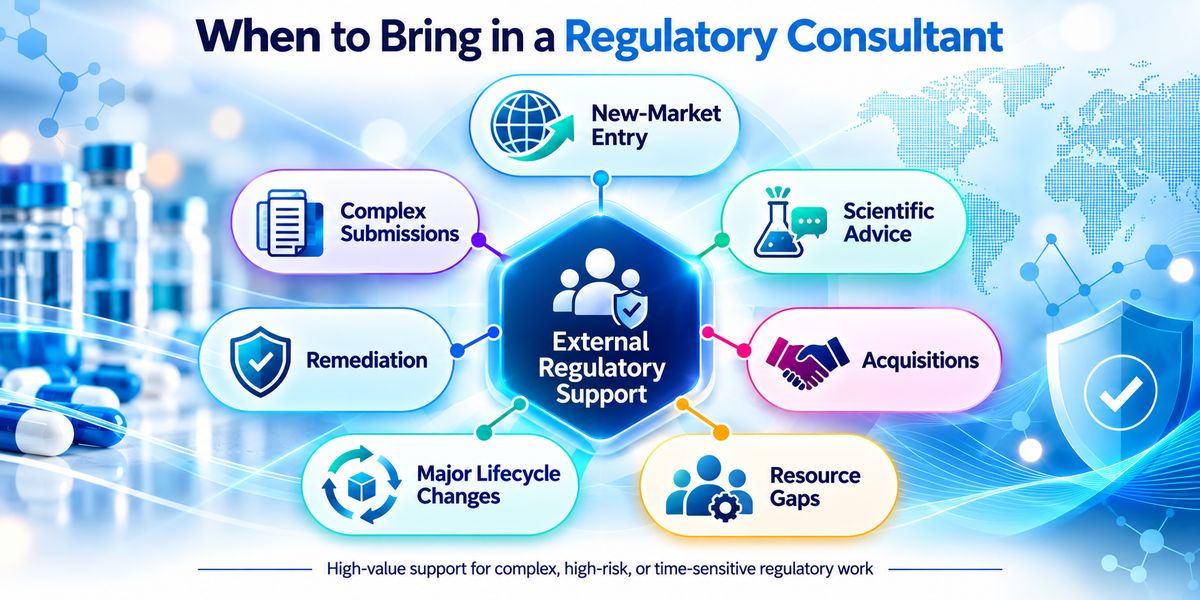
External regulatory support becomes especially valuable when internal teams face complex, high-risk, or time-sensitive regulatory work. Companies often bring in specialists for new-market entry, resource gaps, complex submissions, scientific advice, acquisitions, remediation, or major lifecycle changes. In addition, experienced consultants can provide focused expertise without adding permanent internal capacity. Therefore, the right support can strengthen regulatory decisions, reduce execution gaps, and keep critical programmes moving.
This infographic shows when regulatory affairs consulting can add the most value during high-risk, complex, or resource-intensive regulatory activities.
Final Words
FDA reported that 87% of its inspections in India were unannounced in FY2026 year-to-date, compared with 47% in FY2025. This shift shows why regulatory and inspection readiness must remain continuous. Therefore, pharma regulatory consultants can help companies identify gaps, strengthen regulatory planning, and prepare for greater regulatory scrutiny. As oversight becomes more proactive, early preparation becomes increasingly important.

Quality Management System
We work with pharmaceutical teams to design, implement, and run effective Quality Management Systems, covering change control, CAPA, deviations, and audits to support consistent GMP compliance.
FAQ
A regulatory consultant should be engaged before major pathway decisions, agency meetings, or dossier finalization. Early support helps identify evidence gaps, submission risks, and authority expectations before they cause delays.
Yes. Regulatory consultants can organize CTD content, support eCTD publishing, check technical compliance, and coordinate submission activities. However, the sponsor remains responsible for the accuracy and regulatory compliance of its application.
External support is valuable when a company must assess gaps, prepare authority responses, manage remediation, or implement major regulatory changes. An experienced consultant can structure corrective actions and help keep regulatory commitments on track.
References

Marco Klinger is Head of Quality Services at Zamann Pharma Support, where he leads consulting teams through complex regulatory and quality-driven projects. He brings more than 15 years of hands-on compliance experience across regulated industries. His work includes close collaboration with companies such as Reckitt, Sanofi, Biotech, Biotest, and others. Marco has deep expertise in medical device development, aseptic manufacturing, and the design, implementation, and management of complete quality management systems within GMP-regulated environments.