
In fiscal year 2025, FDA investigators cited inadequate investigations of discrepancies and batch failures 164 times on Form 483s, which made 21 CFR 211.192 the second most common drug GMP observation. In other words, inspectors keep finding the same gaps in deviation management and CAPA effectiveness. Meanwhile, digitalization in pharma industry operations is moving more quality records into electronic systems, so audit trail review and 21 CFR Part 11 controls now face closer scrutiny. As a result, choosing the right pharma QMS software has become a compliance decision, not just an IT purchase. This checklist therefore shows you exactly what to evaluate, from CAPA workflows to computerized system validation, before your next inspection does it for you.
Inhaltsverzeichnis
What Is Pharma QMS Software?
Pharma QMS software is an electronic quality management system (eQMS) that helps pharmaceutical companies manage GMP-regulated quality processes and records. It centralizes document control, approval workflows, deviations, corrective and preventive actions (CAPA), and change control. In addition, it helps quality teams track responsibilities, maintain audit trails, and manage quality records. As a result, companies can improve traceability, strengthen GMP compliance, and maintain better control within their broader pharmaceutical quality system.
How Does an eQMS Support GMP Inspection Readiness?
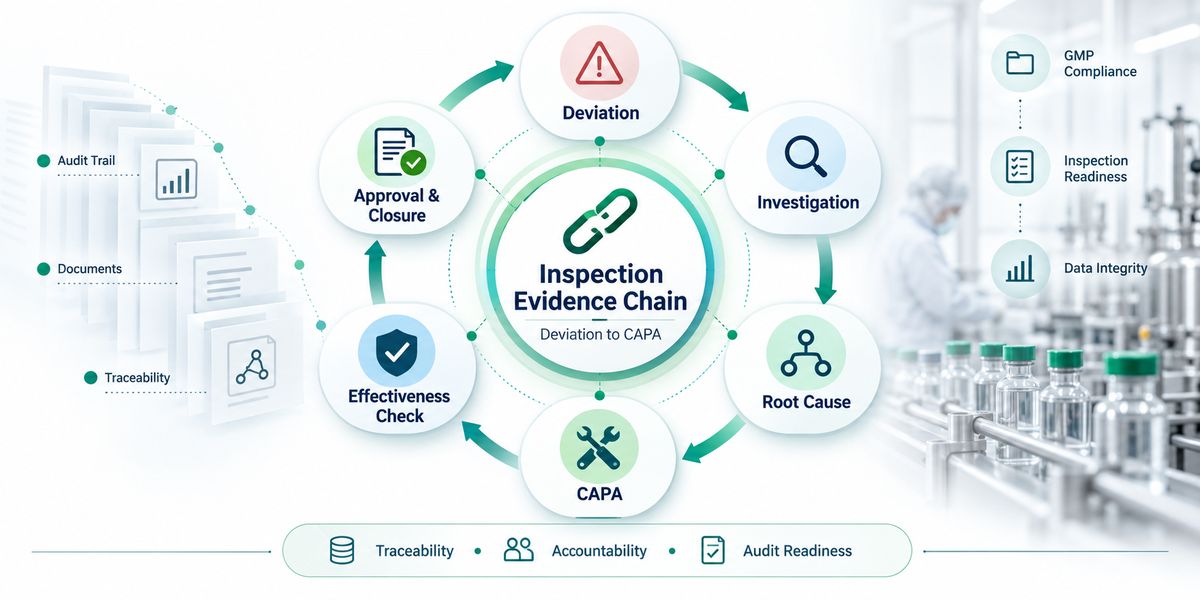
An electronic quality management system (eQMS) helps pharmaceutical companies maintain GMP inspection readiness by connecting quality records and controlled workflows. It allows QA teams to track approvals, investigate deviations, and monitor corrective and preventive actions (CAPA). Additionally, secure audit trails document who performed each action and when. As a result, inspectors can trace quality decisions, review supporting evidence, and verify accountability throughout the pharmaceutical quality system.
This infographic shows how deviation investigations, CAPA tracking, and documented approvals create a traceable evidence chain for GMP inspections.
4 Evidence Tests Before Choosing a QMS Platform
Choosing the right pharma QMS software requires more than comparing features and pricing. A reliable electronic quality management system (eQMS) should help QA teams demonstrate GMP compliance through complete, traceable quality records. Moreover, it should connect investigations, approvals, risk assessments, and CAPA activities with documented evidence. Therefore, pharmaceutical companies should evaluate how effectively a QMS platform supports inspection readiness and data integrity before making a decision.
The following four evidence tests help assess whether a QMS platform can provide the documentation, traceability, and accountability required during GMP inspections.
- Can Deviations Be Traced to Their Root Causes? (Available PDF)
- Does CAPA Closure Demonstrate Effectiveness? (Available PDF)
- Are Changes Supported by Documented Risk Decisions? (Available PDF)
- Can Audit Trails and Access Histories Be Retrieved? (Available PDF)
Can Deviations Be Traced to Their Root Causes? (Available PDF)
A reliable pharma QMS should connect every deviation to its investigation, root cause analysis, and corrective actions. This traceability helps QA teams demonstrate accountability and provide clear evidence during GMP inspections.
Download Quality Systems Approach to Pharmaceutical CGMP Regulations Here
Does CAPA Closure Demonstrate Effectiveness? (Available PDF)
Closing a CAPA does not automatically prove that corrective actions have resolved the underlying problem. Therefore, an effective eQMS should document effectiveness checks, supporting evidence, and follow-up activities to help prevent recurrence.
Are Changes Supported by Documented Risk Decisions? (Available PDF)
Effective pharmaceutical change control requires documented risk assessments, justified decisions, and formal approvals. An eQMS should link these records to each change, ensuring traceability and GMP compliance.
Can Audit Trails and Access Histories Be Retrieved? (Available PDF)
An inspection-ready eQMS should allow QA teams to retrieve audit trails and relevant user access records efficiently. These records help verify data changes, user permissions, and accountability while supporting GMP data integrity requirements.
Download Data Integrity and Compliance with Drug CGMP: Questions and Answers Here
What Should QA Compare Before Selecting QMS Software?
Selecting the right pharmaceutical quality management software requires more than comparing features, pricing, and automation. QA teams should evaluate how each platform manages GMP-critical workflows, protects data integrity, and supports inspection readiness. Moreover, a reliable electronic quality management system (eQMS) should provide traceable records, controlled approvals, and documented quality decisions. Therefore, pharmaceutical companies should request practical demonstrations and supporting evidence before selecting a QMS vendor.
The following QMS software comparison table highlights essential GMP capabilities, potential quality risks, and the evidence QA teams should request from vendors.
| GMP-Critical Capability | What QA Should Compare | Quality-System Risk | Evidence to Request |
|---|---|---|---|
|
Deviation & CAPA Management |
Root cause analysis, CAPA tracking, and effectiveness checks |
Recurring deviations and ineffective corrective actions |
Investigation reports, CAPA records, and effectiveness results |
|
Document & Change Control |
SOP version control, risk assessments, and approval workflows |
Outdated procedures and uncontrolled changes |
Approved SOPs, change records, and risk assessments |
|
Audit Trails & Data Integrity |
Time-stamped changes, user access, and electronic signatures |
Untraceable changes and unauthorized approvals |
Audit trail reports, access histories, and signed records |
|
System Validation & Data Recovery |
Risk-based validation, backup controls, and record retrieval |
Unreliable systems and loss of GMP records |
Validation reports, test evidence, and backup restoration results |
How Should Pharma Teams Validate and Implement Their eQMS?
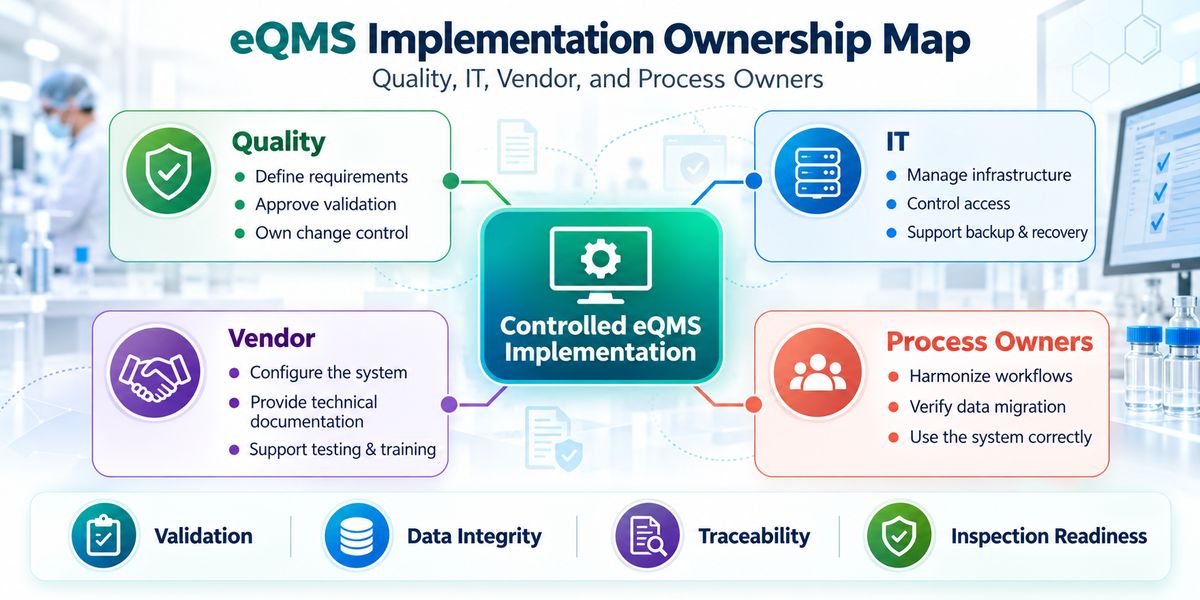
Successful eQMS implementation requires more than installing software. First, pharmaceutical teams should assess suppliers and harmonize GMP workflows before system configuration. Next, risk-based computerized system validation and verified data migration help protect data integrity. Moreover, clear responsibilities across Quality, IT, vendors, and process owners support controlled implementation. Finally, lifecycle change control helps maintain the system’s validated state and GMP compliance.
This infographic shows how Quality, IT, vendors, and process owners share responsibilities to ensure a controlled and compliant eQMS implementation.
Final Words
FDA drug quality assurance inspections increased by approximately 28% in FY2025, highlighting the importance of continuous GMP inspection readiness. However, pharma QMS software delivers real value only when supported by controlled processes, reliable records, and clear accountability. Ultimately, inspection readiness means more than meeting requirements. It means having the evidence to demonstrate compliance whenever inspectors ask.

Digital Solutions for GMP Operations
We support pharmaceutical teams in implementing, maintaining, and optimizing GMP software, data management systems, and computerized workflows that strengthen compliance, data integrity, and operational efficiency.
FAQ
Yes. GMP-regulated computerized systems must be validated for their intended use. Pharmaceutical companies should document user requirements, risk-based testing, and validation evidence before using an eQMS for regulated activities.
An eQMS should provide approved SOPs, deviation investigations, CAPA effectiveness records, change control approvals, and relevant audit trails. These records help QA teams demonstrate traceability, data integrity, and GMP compliance.
No. Software features alone cannot guarantee FDA compliance. Pharmaceutical companies must implement appropriate access controls, electronic signatures, audit trails, and validation measures based on their intended use and applicable regulatory requirements.
references

Reza Esmaeili is a technology and product leader in Germany, combining CTO and CPO experience to bridge engineering execution with customer-driven product strategy. He has led cloud and automation initiatives that improved operational efficiency and reduced costs. He has managed cross-functional teams of engineers and product managers and brought new software products from concept to market. He focuses on building data-driven product organizations by introducing analytics to track performance and guide decisions. He champions Agile ways of working to shorten feedback loops, improve quality, and accelerate go-to-market execution in close partnership with sales and marketing.