
In 2025, EMA reported that over 90% of EU/EEA pharmacovigilance inspections occur through national inspection programmes. As oversight becomes more risk-based, teams need more than completed training records. Therefore, effective pharmacovigilance training must build practical GVP competence across case processing, signal detection, and risk management. It should also create clear evidence that people can perform assigned drug safety tasks correctly during an inspection.
Table of Contents
What Is Pharmacovigilance Training?
Pharmacovigilance training is structured, role-based learning that prepares professionals to perform regulated drug safety activities correctly. It builds practical knowledge in areas such as adverse event reporting, ICSR processing, signal detection, and risk management. In addition, effective training links each role to clear responsibilities and real-world tasks. As a result, professionals can apply regulatory requirements consistently and support patient safety, compliance, and reliable pharmacovigilance operations.
Why GVP Training Matters for Compliance
GVP training helps organizations turn regulatory responsibilities into consistent daily practice. It ensures that employees understand their assigned pharmacovigilance tasks and maintain the skills needed to perform them correctly. Moreover, continued learning keeps teams aligned with changing procedures, regulations, and safety requirements. However, completing a course alone does not demonstrate competence. Companies must also document training, assess practical performance, address identified gaps, and retain clear evidence. As a result, inspectors can verify not only that training occurred, but also that it supports compliant and effective drug safety activities.
4 Competencies That Turn Training Into Practice
Effective pharmacovigilance competence goes beyond understanding regulations. Professionals must apply GVP requirements accurately in real safety activities. Therefore, strong drug safety training should develop practical skills across case handling, signal evaluation, risk management, and quality-system documentation. Together, these competencies help teams perform consistently and provide evidence that inspectors can review.
The following four areas show where pharmacovigilance knowledge must translate into reliable day-to-day performance:
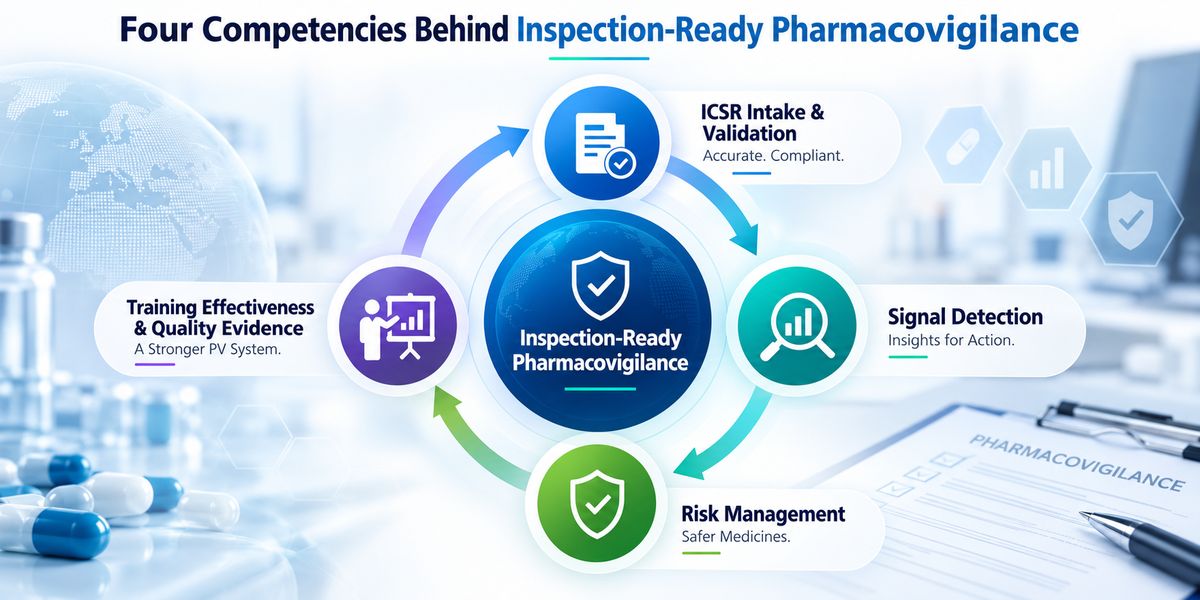
- ICSR Intake, Validation, and Adverse Event Reporting (Available PDF)
- Signal Detection and Validation (Available PDF)
- Risk Management Across the Product Lifecycle (Available PDF)
- Training Effectiveness and Quality System Evidence (Available PDF)
This infographic shows the four practical competencies that connect GVP training with inspection-ready pharmacovigilance performance.
ICSR Intake, Validation, and Adverse Event Reporting (Available PDF)
ICSR management ensures accurate collection, validation, follow-up, and timely submission of adverse reaction reports while maintaining data quality and traceability.
Signal Detection and Validation (Available PDF)
Signal management uses ICSRs, studies, literature, and other safety data to identify new risks or changes in known risks. Teams then validate, prioritize, assess, document, and escalate signals when the evidence justifies further action.
Risk Management Across the Product Lifecycle (Available PDF)
Risk management plans identify key safety concerns and adapt pharmacovigilance actions as new evidence changes a medicine’s benefit-risk profile.
Download GVP Module V – Risk Management Systems (Rev. 2) Here
Training Effectiveness and Quality System Evidence (Available PDF)
Pharmacovigilance quality systems require trained staff, clear responsibilities, controlled processes, and documented evidence to demonstrate ongoing compliance.
How to Choose a Pharmacovigilance Course
Choosing a pharmacovigilance course requires more than comparing price, duration, or certificates. A strong program should reflect current GVP requirements and connect regulatory theory with real drug safety work. Moreover, it should test whether learners can apply knowledge to practical tasks, not simply complete lessons. Therefore, when comparing an online pharmacovigilance course, look closely at regulatory currency, practical exercises, assessments, instructor expertise, and relevance to your role.
The table below shows the key criteria to check and what strong pharmacovigilance training should provide.
| Criterion | What to Check | What Strong Training Should Provide |
|---|---|---|
|
Regulatory Currency |
Check when the content was last reviewed and which GVP or ICH guidance it covers. |
Current guidance, recent regulatory changes, and clear course-update dates. |
|
Applied Exercises |
Look for activities based on real pharmacovigilance processes. |
ICSR cases, signal assessments, causality exercises, risk scenarios, or reporting tasks. |
|
Assessment Depth |
Check whether assessments test application rather than recall alone. |
Scenario-based questions, practical assignments, feedback, and clear passing criteria. |
|
Instructor Expertise |
Review the trainer’s practical and regulatory background. |
Relevant experience in drug safety, pharmacovigilance operations, regulations, or quality systems. |
|
Role Relevance |
Match the syllabus with your actual or target responsibilities. |
Training aligned with roles such as case processing, signal management, risk management, or PV quality. |
How to Build Inspection-Ready Competence
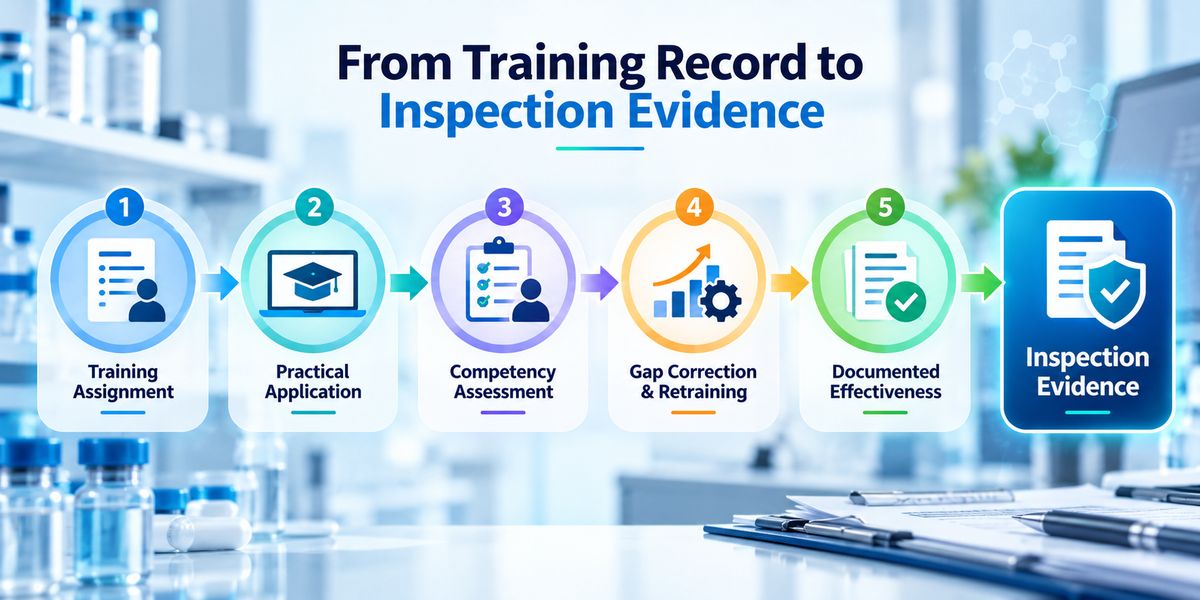
Inspection-ready competence starts with assigning the right training to each role, but it should not end with course completion. Professionals must apply what they learn in real tasks, while companies assess performance against defined expectations. When gaps appear, teams should correct them through coaching, retraining, or additional practice. Finally, organizations should document training effectiveness and competency evidence so inspectors can verify that learning has translated into reliable pharmacovigilance performance.
This infographic shows how training records become inspection evidence through practical application, competency checks, gap correction, retraining, and documented effectiveness.
Final Words
In 2025, EMA reported 10 centrally requested pharmacovigilance inspections while expanding the use of risk criteria to target inspection frequency. This shift shows that inspection readiness increasingly depends on evidence from high-risk and high-impact areas, not simply completed procedures. Therefore, effective pharmacovigilance training should build practical competence, close identified gaps, and produce clear evidence that teams can perform their responsibilities consistently.

GMP-Trainings and Quality Coaching
Through hands-on training and coaching, we help pharmaceutical professionals build practical GMP skills, strengthen quality mindset, and develop effective collaboration within regulated environments.
FAQ
Organizations should maintain role-based training plans, completion records, competency assessments, and evidence of identified training needs. These records should remain traceable and available for audit or inspection.
No. Course completion proves that training occurred, but organizations should also verify that personnel can apply the required knowledge to their assigned pharmacovigilance tasks.
Retraining should follow identified competency gaps and should also be considered when responsibilities, procedures, systems, or regulatory requirements change. The organization should then verify that the training achieved the required level of understanding and performance.
References

Marco Klinger is Head of Quality Services at Zamann Pharma Support, where he leads consulting teams through complex regulatory and quality-driven projects. He brings more than 15 years of hands-on compliance experience across regulated industries. His work includes close collaboration with companies such as Reckitt, Sanofi, Biotech, Biotest, and others. Marco has deep expertise in medical device development, aseptic manufacturing, and the design, implementation, and management of complete quality management systems within GMP-regulated environments.